RE_WASTE | Circular Ecosystems in Textile Chain is an innovative research initiative bringing together the Florentine textile company Alessandro Bini, the Università degli Studi di Firenze (scientific coordinator of the project), and ITS MITA Academy, Tuscany’s higher education hub specialized in fashion.
Developed within the framework of Italy’s National Recovery and Resilience Plan (PNRR), RE_WASTE addresses textile waste reduction by aiming to design garments that generate no production scraps. The project intervenes directly in the cutting, processing and assembly phases to structurally eliminate waste at its source.
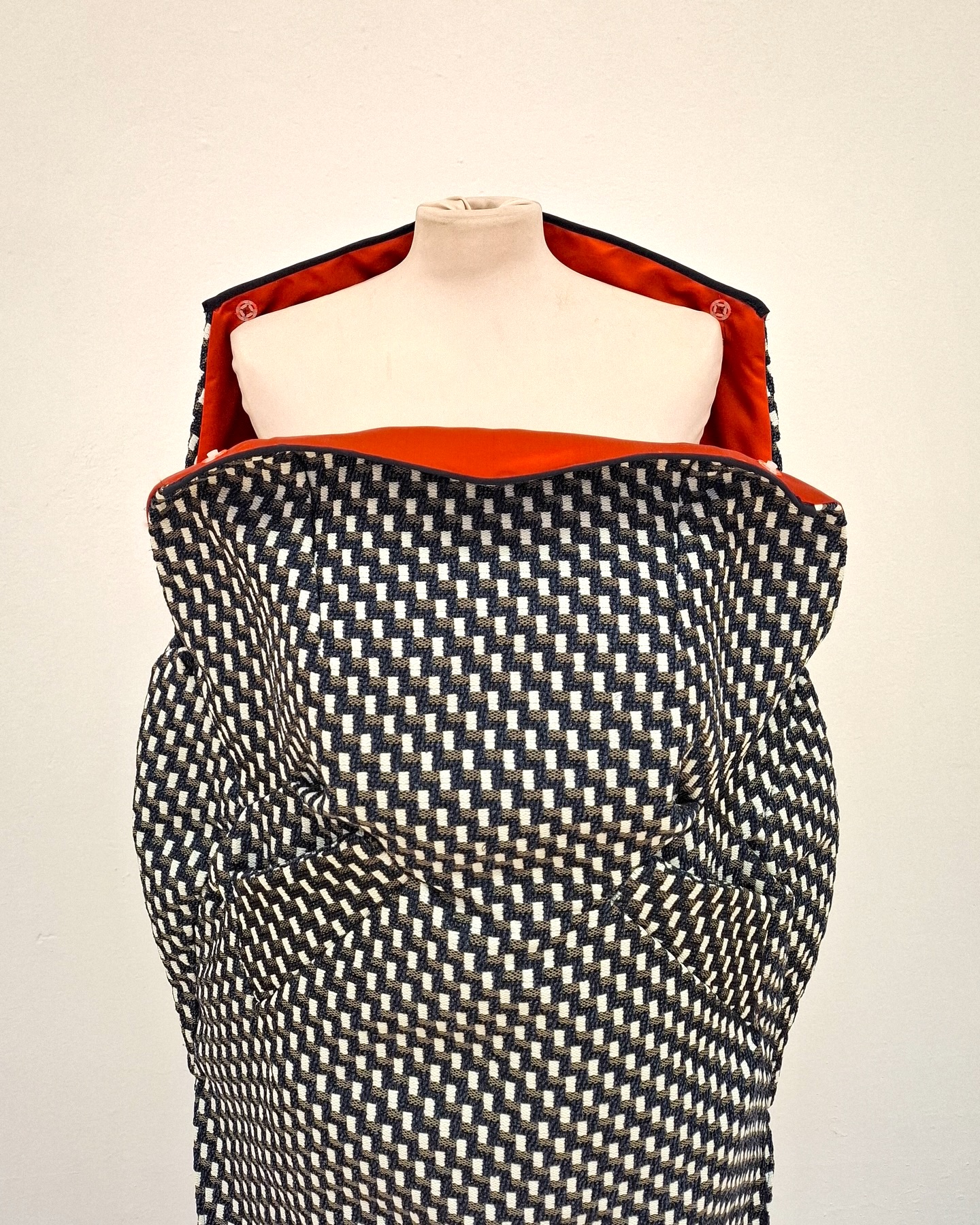
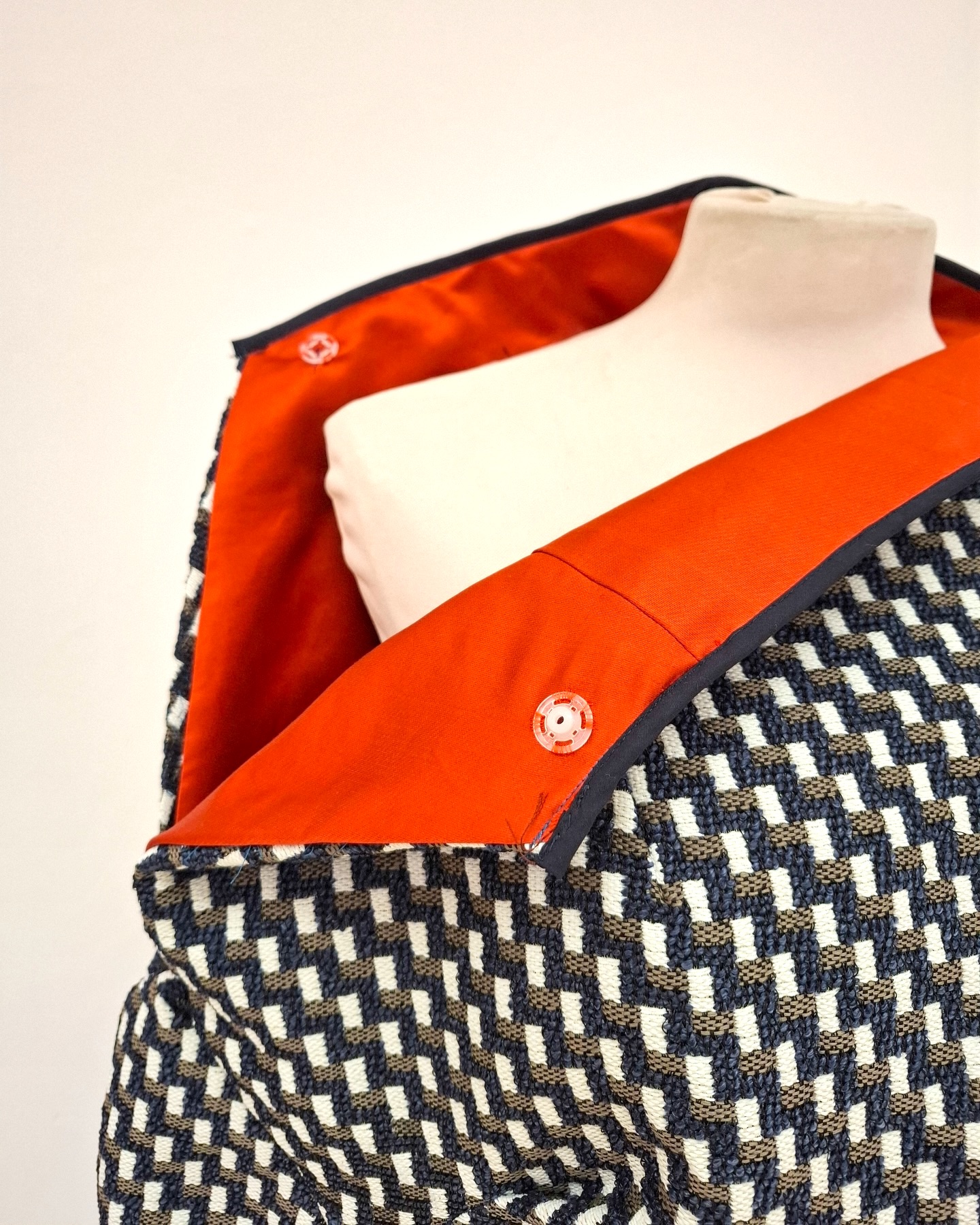
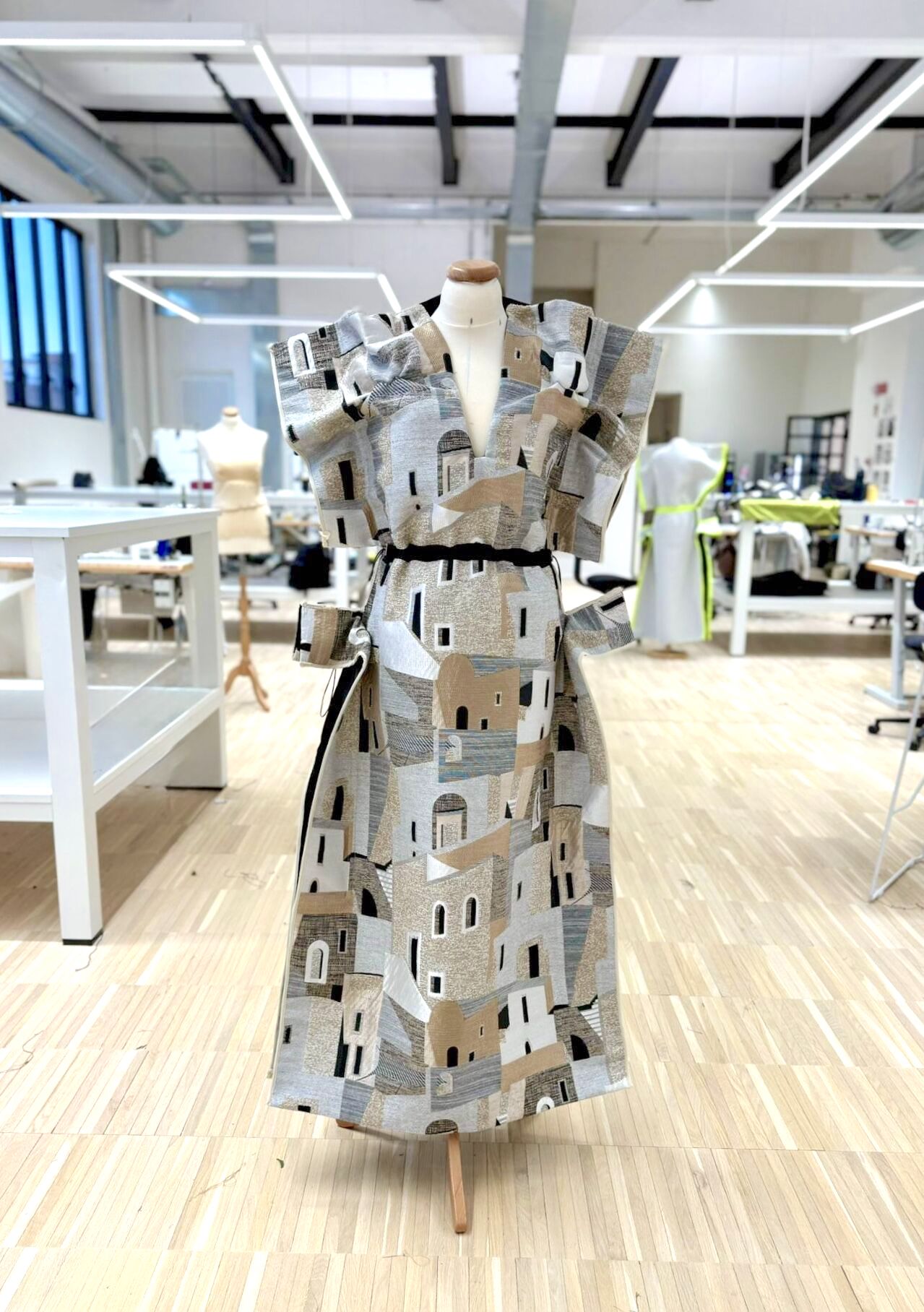
The Capsule Collection
The project’s research activity focuses on rethinking cutting techniques, pattern engineering and manufacturing processes in order to eliminate waste while generating new aesthetic forms.
To this end, RE_WASTE has developed a zero-waste capsule collection inspired by Italian automotive design, crafted using high-end fabrics supplied by Alessandro Bini.
The tailored garments reinterpret icons of Italian automotive design — from the Fiat Nuova 500 to the Ferrari F40 — transforming volumes, surfaces and geometries into zero-waste structural elements.
The collection originates from a concept by designer Angela Beltrame and was developed through the collaborative work of pattern makers and MITA students, integrating research, craftsmanship and advanced technical training.
Florence at the Core of an Innovative Made in Italy
From January 14 to 17, the project was showcased at Paris Déco Off, an international platform where it presented a vision of Made in Italy that integrates research, education and manufacturing excellence.
The Alessandro Bini fabrics used in the project play a central role in the creative process, expressing a tradition rooted in material research, attention to detail and a refined fashion sensibility deeply embedded in Italian manufacturing expertise.
RE_WASTE demonstrates the value of Made in Italy – and, more specifically, Made in Tuscany – projecting it toward the future without renouncing its heritage. Through this approach, sustainability is interpreted not as a constraint, but as a cultural, formal and production-driven opportunity for innovation within the textile sector.